Showing posts with label UNIT 1. Show all posts

Monday, 13 April 2020

PRONUNCIATION OF -ED, REGULAR VERBS

You have shown problems when it comes to pronounce the past of regular verbs. To pronounce the past simple of the regular verbs we have to have in mind that it is the sound which is important, not the letter or the spelling. So, how do we pronounce the past of the regular verbs? Remember: in three different ways.

- When the verb ends in sound /t/ or /d/ ------> /id/

- When the verb ends in an unvoiced sound (/p/,/f/,/s/,/sh/,/ch/,/k/ -----> the final sound is /t/

- When the verb ends in a voiced sound (the rest) ------> /d/


/d/ /t/ /id/
lived worked waited
arrived stopped hated
played asked ended


Now watch the video below to learn and listen to the different sounds of the past of the regular verbs.


Time for you to practise. Next time you have to send a recording to your teacher, pay attention to regular verbs in the past or perfect tenses. Come on, don't be shy, you can do it!!!!! Remember that theory without practice is nothing.

Saturday, 16 November 2019

TESTS UNIT 1

We finished UNIT 1, so now it's time to check how much you know and how much you remember. Click on the links below to take the tests. Don't use your coursebook or notebook or dictionary, and don't forget you need a password. If you still don't have it or you've forgotten, ask your teacher for it.

It's advisable to take them in order. You don't have to do them at the same time, you can take one by one at different times / days.

- QUICK TEST - grammar

- QUICK TEST - vocabulary

- TEST UNIT 1 - grammar and vocabulary


Wednesday, 13 November 2019

WRITING: DESCRIBING A PERSON

Remember you have homework, you have to write an email describing a person.

These are some tips to help you with your writing. If you want to get the whole task as a document, go to 'Writing' to see, download and/or print it.

PLANNING

Paragraph 1    age, family background, work/study

Paragraph 2    personality (good side), any negative things?

Paragraph 3    hobbies and interests

Paragraph 4    your recomendation


Useful language:
  • He's quite/ very + adjective (friendly, extrovert, etc.)
  • She's a bit + negative adjective (untidy, talkative, etc.)
  • He likes/loves/ doesn't mind + verb+ -ing (he loves reading, he doesn't mind doing housework...)
  • He's good at + verb + -ing (he's good at making new friends...)

When you describe someone's personal qualities you should support your description with examples and/or justifications. e.g.  

          Wayne is very shy - he finds it difficult to make new friends.

You can also describe someone's personality through their mannerisms by:

·          a) referring to the way they speak e.g. 

          He speaks in a soft voice as if he were whispering.

·         b) describing the gestures they use e.g. 

          She constantly uses her hands when she speaks.

·         b) mentioning a particular habit they have. e.g.
  
                Jason always bites his nails when he is nervous.
 
When you mention someone's negative qualities you should use mild language (seems to, can be rather,  a bit etc).For example, instead of saying Paul is lazy, it is better to say 

Paul can be lazy at times
 
Paul is a bit lazy

Paul can be rather lazy

Thursday, 7 November 2019

PERSONALITY ADJECTIVES

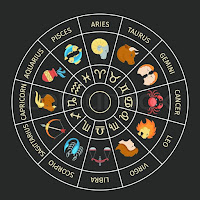
Studying Zodiac signs and the personality traits that are associated with these signs is a great way to quickly improve your vocabulary related to personality. Each sign begins with a short overview of the main characteristics of the sign.

For Example:
Capricorn is the tenth sign of the Zodiac and associated with hard work and business affairs ...

This section is then followed by a listing of the positive and negative traits.

For Example:
Positive
Practical and prudent ...
Negative
Pessimistic and fatalistic ...

Here adjectives are paired up in synonym and related word pairs.

Start with your own sign, or read the Zodiac signs of your friends. By studying these signs you'll quickly increase your ability to describe other people's personalities!

Click on the image to go to the page

Click here to read about the zodiac


The descriptions used in this reference are taken from the Zodiac resource at Wikipedia.

Tuesday, 5 November 2019

GOING TO AND WILL

This is a video with good explanations about when and how to use going to or will.


And now do these exercise:

Exercise 1

Exercise 2

Tuesday, 29 October 2019

FUTURE TENSES

Let's revise going to, will, and the present continuous to talk about predictions, decisions and plans in the future with the presentation we saw in class.


Monday, 28 October 2019

FAMILY - VOCABULARY


  1. Do you need to revise the members of the family? Try these exercises ...


Family 1

Family 2

Go to this BBC page to read about modern families, with audio too!

And now, why don't you listen to this crazy song about a strange family? It's fun!


You can read the lyrincs here or you can download the document, in case you want to make any annotations here.


Many many years ago when I was twenty-three
I was married to a widow who was pretty as can be
This widow had a grown-up daughter who had hair of red
My father fell in love with her and soon they too were wed
This made my dad my son-in-law and really changed my life
My daughter was my mother ’cause she was my father’s wife
And to complicate the matter even though it brought me joy
I soon became the father of a bouncing baby boy
My little baby then became a brother-in-law to Dad
And so became my uncle, though it made me very sad
For if he were my uncle, then that also made him brother
Of the widow’s grown-up daughter who was of course my stepmother
Father’s wife then had a son who kept them on the run
And he became my grandchild, for he was my daughter’s son
My wife is now my mother’s mother and it makes me blue
Because although she is my wife, she’s my grandmother too
Now if my wife is my grandmother, then I’m her grandchild
And every time I think of it, it nearly drives me wild
For now I have become the strangest case you ever saw
As husband of my grandmother, I am my own grandpa
Oh I’m my own grandpa
I’m my own grandpa
It sounds funny I know,
But it really is so
Oh I’m my own grandpa


Wednesday, 23 October 2019

NON ACTION VERBS

This is another presentation to help you understand and learn about non action verbs. I hope it helps!


Tuesday, 22 October 2019

NON-ACTION VERBS

Remember that not all the verbs in English can be used in the continuous. These verbs are called state verbs or non-action verbs. Now you can see again the presentation we saw in class and if you want to have a more accurate explanation go to "Grammar" to see, download and/or print a document on the subject.


Non Action Verbs - Created with Haiku Deck, presentation software that inspires


Friday, 18 October 2019

PRESENT SIMPLE - CONTINUOUS


Go to "Grammar" to see, download and/or print the document with explanations about when to use the Present Simple and when to use the Present Continuous.

If you don't have or don't remember the password, you can ask your teacher for it.

And if you need some more practice, try the exercises below:

Exercise 1

Exercise 2

Exercise 3

Exercise 4

Exercise 5

Exercise 6


Thursday, 17 October 2019

PRESENT SIMPLE OR CONTINUOUS?

Now you can revise the use of present simple and the present continuous with the presentation we used in class.


......................

If you need some more pratice, you might like to try these exercises

Exercise 1

Exercise 2

Exercise 3 

Wednesday, 16 October 2019

ONE HUMAN FAMILY, FOOD FOR ALL

One human family, food for all, is a campaign by Caritas Internationalis aimed at ending hunger by 2025.
Based on an ancient story about hunger and sharing, this animated video is part of Caritas’ “One Human Family, Food for All” campaign. The “allegory of the spoons” teaches us that when we struggle to feed only ourselves, everyone goes hungry. But when we focus on our neighbour’s hunger, we discover there are ways to feed everyone. What do you think?


Tuesday, 15 October 2019

WORLD FOOD DAY

World Food Day is celebrated every year around the world on 16 October in honour of the date of the founding of the Food and Agriculture Organization of the United Nations in 1945. Since 1979 the day has been celebrated widely by many other organisations concerned with food security, including the World Food Programme and the International Fund for Agricultural Development. Its aim is to bring awareness to malnutrition, which has taken many forms throughout history.
This year's theme is Healthy diets for a #ZeroHunger, working to make healthy and sustainable diets affordable and accessible to everyone around the world.
820 million people suffer from hunger, while almost 2 billion are either obese or overweight. And as healthy eating is becoming more difficult to achieve, the side effects are negatively impacting the planet.


You can also watch this video by National Geographic about how we can feed our hungry planet


What do you think? Is it a good idea? Do you have any other ideas?


Sunday, 13 October 2019

FOOD FUN FACTS

Would you have soup for breakfast? What about rice or beans? Learn about the first meal of the day in different countries. Which surprises you the most?


Stolen Cheese? Eternal Honey? Edible stickers? Frogs in the milk? These and others are part of 12 unbelievable facts about food.

Thursday, 10 October 2019

Aromatic herbs and spices

 Specifically these are food or drink additives of mostly botanical origin used in nutritionally insignificant quantities for flavouring or colouring. You can click on the image to make it bigger, you can save it to your device or print it.


Wednesday, 9 October 2019

ENGLISH FOOD

What do you know about English food? What is their traditional dish? What do they usually eat? Is fish and chips as popular as you think? What if I told you curry is one of their favourites, would you believe me? You can go through this presentation to learn about it!!!


Were you surprised about curry??? You can then read the article 'How Britain got the hots for curry' by the BBC here

Enjoy your meal!!!!


Tuesday, 8 October 2019

WAYS TO COOK FOOD


  PeelRemove the outer covering from a fruit, vegetable.
  SliceCut a thicker piece of food into slices.
  Grate  Rub food against a grater so it is cut it into a lot of small pieces.
  PourPour the milk, water ext. into the bowl
  MixCombine food / liquid together so it becomes one.
  WhiskA utensil needed for whipping eggs or cream. very quickly
  BoilHeat a liquid until it boils.
  FryCook food in a very hot oil.
  RollRolling pin used for making pastry flat and making cake shapes.   
  StirMove a spoon around in a pan in a circle.
  Simmer       Liquid or food just below boiling point and bubbling only gently.        
  PoachCook an egg in or over boiling water. Fish can also be poached.
  BakeCook food without a flame, in an oven.
  RoastCook meat a long time an oven or over a fire
  GrillCook food under heat from a metal bar or flame.

FOOD: vocabulary

Lets revise and learn vocabulary about food. Click on the links below to go to the list of words. Once there try to remember as many words as you can, then  click on 'Things You Can Do with This Word List' to choose different games which will help you memorize them.  I hope you find it useful!!!

Meat

Fish

Fruit

Vegetables

And now watch these videos, let's practise pronunciation!!!

FRUIT


 VEGETABLES